
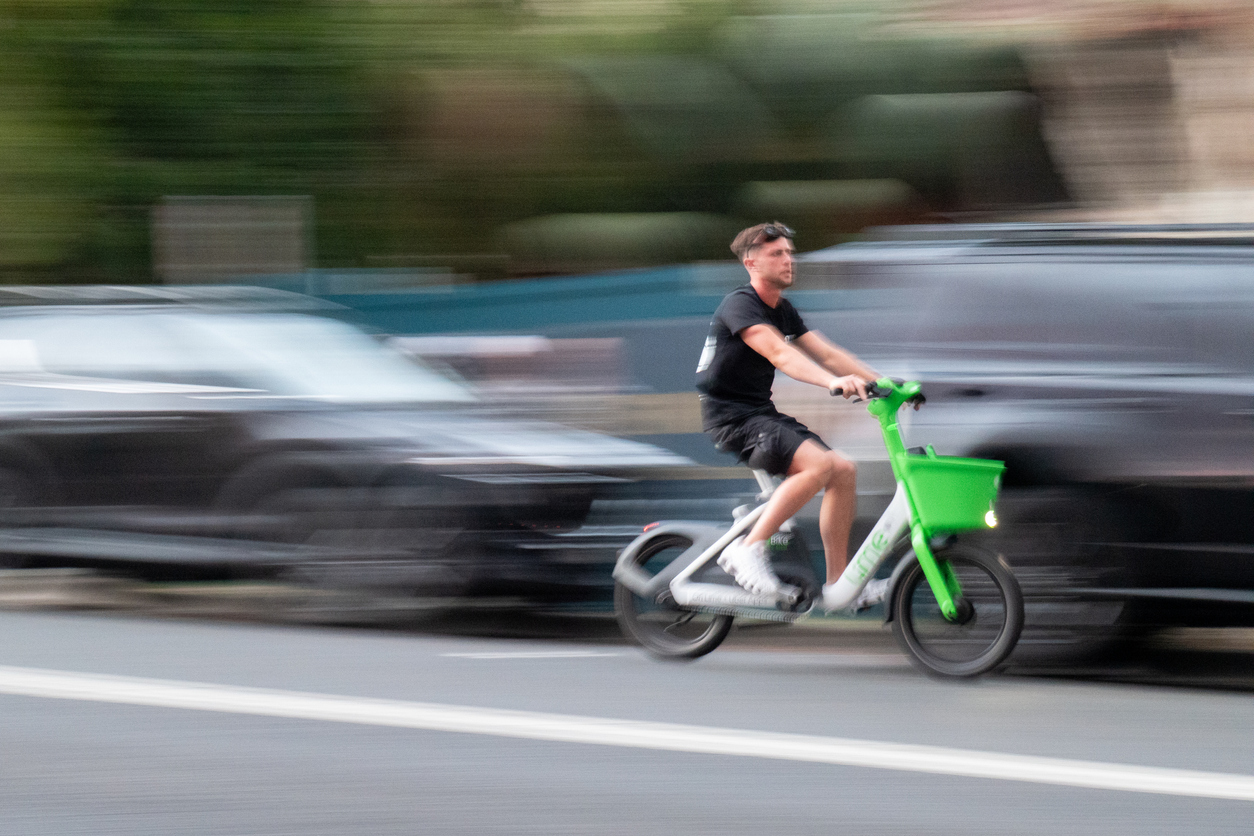


In one of our previous posts, we asked a simple question: Does your child’s e-bike follow Maryland’s rules? If you’re anything like us, you’re seeing an uptick in e-bikes and e-motos on our roads and trails, and you may be wondering what the rules are. Here’s why that question matters, and the consequences of the answer being “no”.
In Orange County, California, the District Attorney’s office says it has charged 12 parents with child endangerment since January, and that e-bike and e-motorcycle crashes are the leading reason local children end up in the emergency room.
Here in Maryland, many neighbors are noticing an increase in motorized bikes on roads and trails. Under Anne Arundel County’s trail system rules, “motorized vehicles including motorbikes, motorcycles and scooters are prohibited,” and the county says its park regulations are enforceable by Anne Arundel County Police.
Neighbors have been speaking up, too. According to WMAR-2 News, residents say the presence of e-motos on the B&A Trail has been increasing for a long time despite the ban, and they worry about the danger to riders, pedestrians and other cyclists. Some are asking how to make the busy crossings safer, and many want to see more rules and stronger enforcement. At the very least, people should know how dangerous these situations can be. Our bicycle accident attorneys will explain further.
A vehicle that looks like a bicycle, or is sold as an “e-bike,” may not qualify as an e-bike under the law. A qualifying e-bike under Maryland Code of Transportation § 11-117.1 has working pedals, two or three wheels, and a motor of 750 watts or less. However, many of the high-powered electric dirt bikes and “e-motos” marketed to teens are different: they have throttle-only controls, no pedals, and motors many times that size, and carry licensing, registration and insurance requirements that an unlicensed minor cannot meet. If you aren’t sure how your child’s vehicle is classified, check with Maryland’s MVA before letting them out onto a public roadway.
If your child has a qualifying e-bike (Class 1, 2 or 3), Maryland treats it like a bicycle: no license, registration, or insurance is required to ride it on the road, but the bicycle rules still apply, including the minimum age of 16 for Class 3, the helmet requirement for riders under 16, and lights and reflectors for nighttime riding. If your child has an e-moto, it is treated as a motor vehicle, and the rider needs a license, registration, and insurance to ride it on a public road. Many e-motos, particularly off-road dirt bikes, may not be able to meet those requirements at all, and an e-moto that can’t should be ridden only on private property. E-motos aren’t safe on bike paths or multi-use trails, where they share space with walkers, joggers, and cyclists, and Anne Arundel County’s trail rules prohibit motorized vehicles on county trails.
Like California, Maryland also puts responsibility on adults. Under Transportation § 21-1201, a parent or guardian may not authorize a minor to violate the state’s bicycle laws, or knowingly permit one to do so. That rule applies to true e-bikes, which Maryland regulates like traditional bicycles (no license, registration, or insurance required), and to electric scooters, which Maryland regulates alongside bicycles. A violation is generally a misdemeanor that can carry a fine of up to $500 under Transportation § 27-101, and that’s before counting the cost of an injury or property damage. A more powerful e-moto is a different matter: if it qualifies as a motor vehicle, it is instead subject to Maryland’s motor vehicle laws, including licensing, registration, and insurance requirements. Either way, not knowing how your child’s vehicle is classified is a much harder position to defend when the answer readily available.
No parent wants to imagine getting a call that their child has been in an accident. The most important thing you can do is educate yourself and your child about responsible riding, protective gear, knowing the rules of the road/trail, and understanding the risks of riding. Their safety is worth that conversation. Call our personal injury lawyers if you need to make a claim.